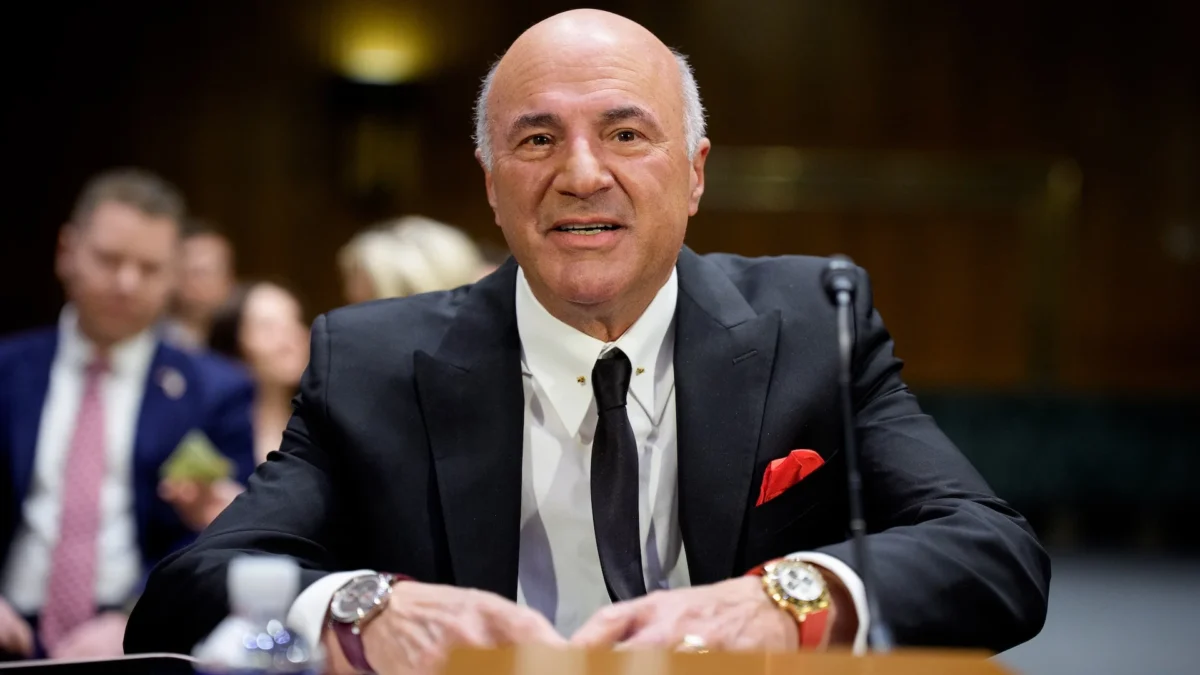
Kevin O’Leary says Bitcoin will reach $1 million. The number is not the interesting part of what he said.
The Shark Tank investor made the call at the Avalanche Summit in New York, speaking to The Rollup podcast, and attached a condition to it immediately.
“It will [hit $1 million], if it can resolve the doubt creeping in around quantum computing, you know, breaking the algorithms and the chain and the encryption,” he said.
The Condition Is Doing All the Work
Strip the headline number away and what remains is an argument about institutional money.
O’Leary’s position is that quantum computers capable of breaking Bitcoin’s encryption are a barrier to institutional adoption rather than a distant technical curiosity. The industry shorthand for that moment is Q-Day, and a Google research paper published earlier this year suggested it could arrive sooner than the field had assumed. Estimates still run from the early 2030s to never.
The number that matters in his account is not a million. It is three. Major institutional funds currently cap Bitcoin exposure at around 3%, and his argument is that the cap does not lift while the encryption question stays open.
He also described the trade some investors are making on the other side of it. “Some people are putting on a counter bet by investing in some of these nascent companies that are developing quantum computing software,” he said. “It’s a security play and that’s also on the chain.”
Where He Said It Is Part of the Story
O’Leary was speaking at a conference run by Avalanche, and he used the platform to write off its largest competitor.
“I don’t think it’s going to be Ethereum anymore,” he said. “I don’t think it’s fast enough. I don’t think it’s secure enough. That’s an opinion, my own opinion.”
That is a reversal. By his own account his thesis eighteen months ago was Bitcoin and Ethereum exclusively, on the basis that the two captured 97% of the industry’s volatility. He now expects different industries to settle on different chains rather than converge on Ethereum, and gave sports memorabilia on Avalanche as his example, at Avalanche’s own event.
He was warmer on the wider category, predicting crypto would become “the 12th sector of the S&P” because it serves every existing sector. His own portfolio rules cap any single stock at 5% and any sector at 20%, though he said crypto has run as high as 23%.
He Was Also Talking His Own Book
The interview took in a second investment case. O’Leary argued that AI cannot run without power, that “you might as well buy the picks and shovels,” and pointed at BitZero, a former Bitcoin miner turned power company with operations in Norway, Finland, Alberta and Utah.
O’Leary is a strategic investor in BitZero, which now trades on Nasdaq. That does not make the argument wrong. It does mean the pitch and the position are the same thing, and it went unmentioned alongside the forecast.
What a Prediction Is Worth
Nothing here is a result. O’Leary named no timeline, holds no lever over the quantum question, and made both calls at an event hosted by a chain he favours while promoting a listed company he has money in.
The quantum point is the part worth keeping. Whether an encryption break is solvable, and whether institutions believe it is, is a real gate on real money. The million is a number attached to it for effect.