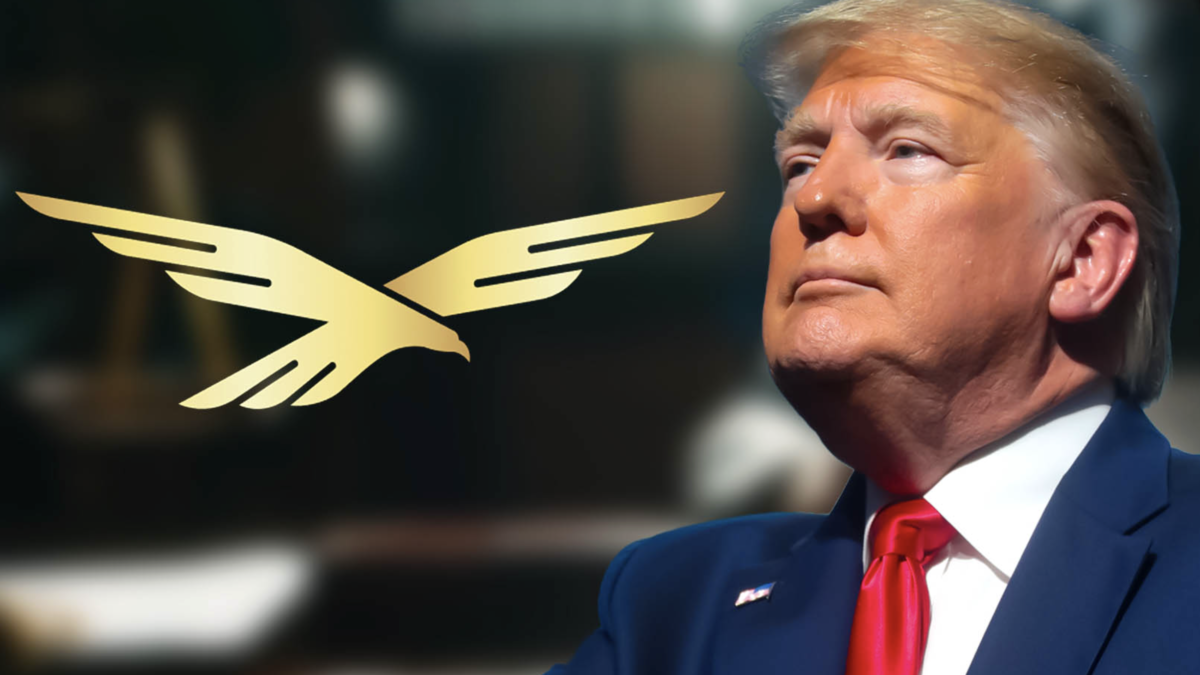
A wallet holding the same quantity of WLFI tokens that President Donald Trump disclosed as his founder allocation has been moved into a vesting contract, giving a stake worth roughly $800 million a date on which it can begin to be sold.
That date is 2028. Until now there was no date at all.
From Indefinite to Dated
Blockchain records show six wallets holding World Liberty Financial’s insider allocation entered a vesting contract in May. Joining the contract triggered an immediate destruction of 10% of the tokens involved. One of those wallets holds about 14 billion WLFI after that burn, matching the amount disclosed as the president’s founder allocation.
The schedule imposes a two-year cliff, meaning no tokens can be sold before 2028.
The significance is the change in kind rather than the number. Founder tokens previously carried no timetable at all. They could show a large value on paper with no mechanism by which that value could ever be turned into cash. A definite timetable replaces an indefinite lock, and the stake becomes an asset with a maturity date rather than a paper figure.
The contract is now the single largest holder of WLFI, sitting on 46.1 billion tokens, just under half of everything in existence.
The Bill That Votes This Week
The timing places this alongside something the Senate takes up in the coming days.
The latest version of the Clarity Act, the digital asset market structure bill facing a procedural vote on 15 September, contains stricter ethics provisions than earlier drafts. They would require senior government officials holding significant crypto interests either to divest them or to place them in a qualified blind trust.
CNR reported last week on the lobbying battle around that bill, in which crypto advocacy groups and community bankers have spent the recess pressing senators in their home states. Most of that fight concerns whether platforms can pay yield on stablecoins. The ethics provisions have drawn less attention, and they are the part that would bear on holdings of this kind.
Whether the provisions survive into a final text, and what they would require in practice, is not settled. The 15 September vote is procedural and determines only whether the bill reaches a full Senate debate.
What Has Already Been Realised
The $800 million is separate from money already taken.
Trump’s 2025 financial disclosure recorded crypto-related income including approximately $515 million from the sale of WLFI tokens released by World Liberty Financial. The venture takes a share when it sells tokens to outside buyers, and that share has already converted into income.
So the position divides into two parts. One has been realised and is a matter of federal disclosure. The other is the founder allocation, which remains unsellable until 2028 at the earliest and whose eventual value depends entirely on where WLFI trades by then.
What the Company Says
A spokesperson for World Liberty Financial, David Wachsman, described the mechanics as following a governance decision.
‘The community voted in support of a founder burn,’ he said. ‘For this to happen, co-founders moved their tokens into a smart contract that would effectuate the burn.’
World Liberty Financial’s own documentation states that entering the vesting contract was optional. Holders who did not accept the terms keep their tokens locked indefinitely while retaining governance voting rights.
The Background to the Structure
The vesting arrangement follows a proposal World Liberty Financial put to holders in April, covering 62.3 billion previously locked tokens.
Under that plan, early supporters holding 17 billion tokens would face a two-year cliff followed by linear vesting. Founders, team members, advisers and partners would see 10% of their 45.2 billion allocation burned, with the remainder unlocking over a period of years after the same two-year cliff.
World Liberty Financial raised around $550 million across its token sales, selling 20 billion tokens at $0.015 and a further tranche at $0.05. The tokens were sold as governance instruments and were non-transferable at issue.
Nothing described here has been alleged to be improper, and nothing in the public record suggests it was. What has changed is that a holding which previously had no route to being sold now has one, in the same week the Senate considers a bill that would ask officials with holdings like it to divest or blind-trust them.