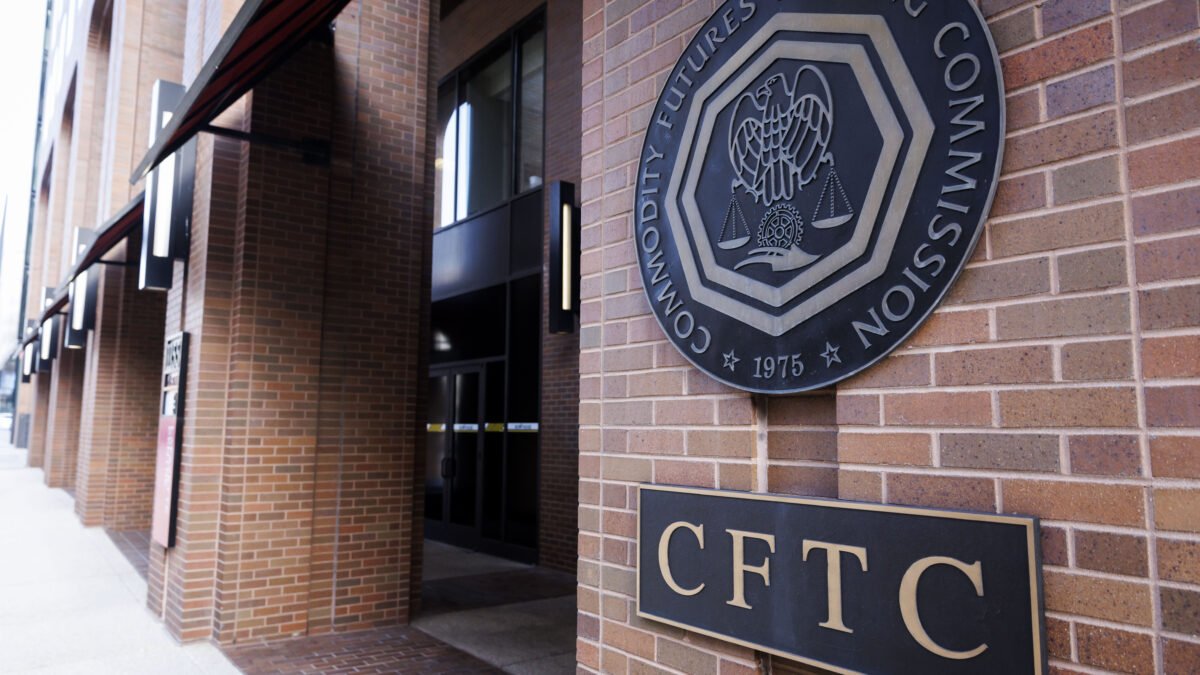
Four US venues have now asked the CFTC to let them list perpetual futures on individual stocks. Coinbase, Kalshi and Bitnomial filed on 18 September. OG.com followed on the 25th.
The contracts never expire, settle in cash and trade around the clock on weekdays.
The United States has done this before, and the venue that offered it is gone.
What OG.com Filed
OG.com Markets was spun out of Crypto.com and valued at $5 billion on separation. Robinhood holds an equity stake, taken as part of a multi-year agreement to route its prediction markets through OG.com’s CFTC-regulated exchange and clearinghouse. Chief executive Kris Marszalek had said the platform would move “beyond prediction markets toward futures and perpetual contracts.”
The terms are specific. Cash settlement in dollars, no expiry, trading 24 hours a day Monday to Friday, maximum leverage of around six times, margin of at least 15.05% of position value, and a one-cent tick.
The underlyings are Apple, Amazon, Alphabet, Meta, Microsoft, Nvidia, Tesla, AMD, Micron and SpaceX.
The Name on the List That Is Not Listed
SpaceX is privately held. Every other underlying has a continuous exchange quote that a cash-settled contract can reference, and SpaceX does not.
How that settlement price gets defined is the detail to watch, because it is the one contract on the list whose value cannot be read off a public market.
The US Already Tried This
Single-stock futures became legal under the Commodity Futures Modernization Act of 2000, and OneChicago listed them from 2002.
They never took share from equity options. The reason usually given is margin. Security futures carried a minimum customer margin requirement of 20% of market value, while comparable options positions could be carried for less in portfolio margin accounts.
OneChicago closed for trading in September 2020.
The Relief Arrived Three Months Late
On 22 October 2020 the SEC and the CFTC jointly approved cutting that minimum from 20% to 15% of market value. It took effect on 24 December 2020.
Their stated reasoning was parity. Unhedged short at-the-money exchange-traded options held in portfolio margin accounts already ran at 15%, and the agencies judged security futures to carry comparable risk.
The rule landed roughly three months after OneChicago had stopped trading.
OG.com’s filing sets margin at a minimum of 15.05%, a fraction above that floor. The product is being built to the number that came too late for the last attempt.
Approval Is Not Automatic
The CFTC set up a case-by-case review for perpetual contracts in May, and has since approved Kalshi’s Bitcoin perpetual futures and granted temporary relief to registered exchanges converting existing crypto futures into perpetuals.
On equities it has been firmer. Products tied to individual stocks must be reviewed one at a time rather than waved through under a blanket perpetuals framework.
Four filings in a week is not a market yet. It is four venues betting the margin arithmetic works this time.