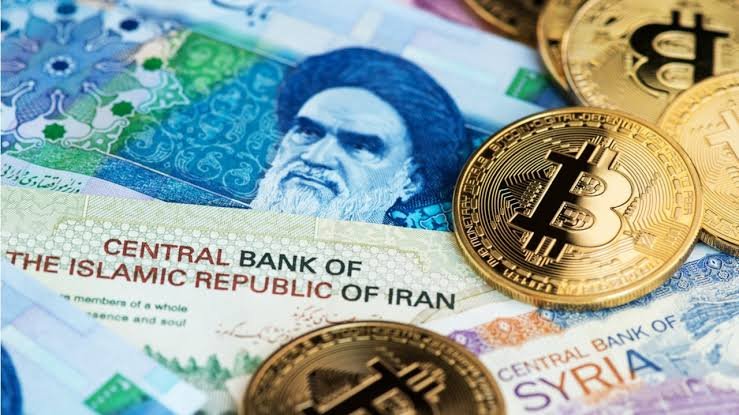
Federal prosecutors in Manhattan have filed a civil forfeiture complaint against roughly $61 million in cryptocurrency, alleging it represents proceeds from black-market sales of sanctioned Iranian crude oil intended to finance the Iranian government and its military, including the Islamic Revolutionary Guard Corps.
The complaint alleges that two Chinese companies, Blessed Trust and Hexa Whale, used trading accounts at the UAE-based exchange Binance to launder the money. Binance is not accused of wrongdoing in the complaint.
The allegations are unproven and remain so until a court enters judgment.
Sixty-One Million Out of Fifteen Hundred
The headline figure is not the striking one.
Deputy US Attorney Sean Buckley said the complaint alleges the Iranian government used a network of cryptocurrency actors in China and elsewhere to launder more than $1.5 billion in illicit oil money. The forfeiture action targets approximately $61 million of it.
That is around 4%. The remaining 96% is not part of this filing, and the complaint does not say where it went or whether it is recoverable. A $61 million seizure sounds substantial in isolation. Set against the flow it came from, it is a fraction.
The Detail That Explains the Jurisdiction
An obvious question hangs over a case involving two Chinese companies, a UAE-based exchange and Iranian oil. Why is this being heard in New York?
The complaint answers it in two places, and both are worth a reader’s attention.
First, prosecutors allege that Blessed Trust provided on-ramp services converting conventional currency into cryptocurrency, ‘including through the use of U.S.-based cryptocurrency issuers.’ The Justice Department does not name them. The category is what matters: dollar-denominated tokens issued by American companies, which carry American legal exposure wherever in the world they end up.
Second, the complaint alleges that both companies used the US financial system to send or receive tens of millions of dollars as part of the scheme.
Neither company is alleged to be American. Neither is the exchange. The hook is the dollars, and the tokens that represent them.
Unhosted Wallets, Traced
The complaint describes a series of interrelated addresses it calls ‘Entity A,’ which it says received and distributed more than $1.5 billion in oil proceeds before funnelling money to IRGC-related money services businesses, IRGC-related cryptocurrency addresses and an Iranian exchange.
Those addresses are described as unhosted. That means self-custodied, with no exchange or intermediary holding the keys, which is the category that has sat at the centre of arguments about crypto regulation for years.
Prosecutors say the transfers were designed to obscure the nature, source and ownership of the funds. They also say they followed them. Whatever else the complaint proves or fails to prove, the FBI’s New York Counterintelligence and Espionage Division has laid out a traced path through wallets nobody was required to register.
What a Forfeiture Complaint Actually Is
Civil forfeiture is an action against property rather than people. No individual has been charged in connection with this filing.
That matters in both directions. It means the government does not have to prove a criminal case against anyone to take the money, and the burden is lower than in a prosecution. It also means nobody faces prison, and the companies named have not been convicted of anything.
The Justice Department’s own notice is explicit: a civil forfeiture complaint is merely an allegation that property was involved in or represents the proceeds of a crime, and the allegations are not proven until a court rules for the United States.
The Wider Campaign
The filing sits inside a broader push.
In August the Treasury expanded its authority to sanction participants in Iran’s digital asset sector. That followed sanctions in July which prompted Tether to freeze more than $131 million across four Tron wallets. The Justice Department has not said whether those funds overlap with the assets in this complaint.
Both companies named here surfaced earlier in a Senate inquiry, when Senator Richard Blumenthal requested records concerning alleged Iran-linked transfers in February. Binance denied wrongdoing in connection with those reports.
The case is being handled by the US Attorney’s Illicit Finance and Money Laundering Unit alongside its National Security and International Narcotics Unit.