Federal prosecutors in Manhattan have charged two Robinhood engineers with commodities fraud and wire fraud, alleging they traded perpetual futures on Hyperliquid using confidential information about which cryptocurrencies Robinhood was about to list.
Hefu Chai, 36, of Menlo Park, California, and Huaisong Xiang, 30, of Jersey City, New Jersey, each face one count under the Commodity Exchange Act and one count of wire fraud. The complaints were unsealed on Tuesday. The Justice Department describes both men as Robinhood employees; Robinhood has said they are former employees.
The charges are accusations and both men are presumed innocent unless and until proven guilty.
What Prosecutors Allege
According to the complaints, Chai and Xiang had access through their roles to nonpublic information about whether and when Robinhood would support additional cryptocurrencies on Robinhood Crypto, the company’s digital asset trading arm.
Between 2025 and 2026, prosecutors say, the pair repeatedly bought perpetual futures tied to particular tokens on Hyperliquid shortly before Robinhood publicly announced it would list those same tokens. Each is alleged to have profited by more than $50,000.
‘Misappropriating confidential information to trade in the derivatives markets for personal benefit is illegal,’ US Attorney Jamie McDonald said. ‘That is exactly what we allege Hefu Chai and Huaisong Xiang have done.’
The Statute Is the Story
The charge that matters here is the first one. Prosecutors did not bring securities fraud. They used the Commodity Exchange Act, the statute governing derivatives.
That is a deliberate choice, and McDonald spelled out why it matters in the same statement.
‘Today’s charges make clear that corporate insiders cannot evade the securities and commodities laws by trading based on misappropriated information in derivatives like perpetual futures, tokenized securities, or other similar financial instruments,’ he said.
Read that list again. Perpetual futures, tokenized securities, or other similar financial instruments. It is a claim of reach over a whole category of products, including some that barely exist at scale yet, made through a statute that predates all of them.
When the Justice Department charged former Coinbase product manager Ishan Wahi over confidential listing information in 2022, the route ran through wire fraud and securities theories. Wahi later pleaded guilty to wire fraud conspiracy. This case reaches the same conduct by a different door.
The Same Day the Senate Could Not Draw the Line
The timing is worth pausing on.
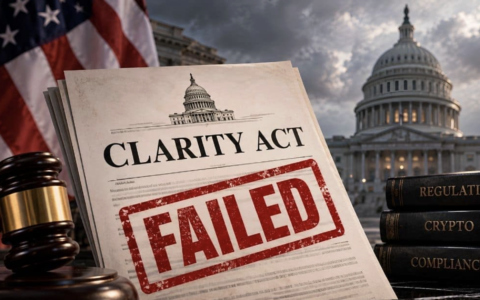
These complaints were unsealed on 15 September. That afternoon, the Senate failed to invoke cloture on the Digital Asset Market Clarity Act, the bill whose central purpose was to settle when a crypto asset falls under securities law and when it falls under commodities law, and to divide oversight between the Securities and Exchange Commission and the Commodity Futures Trading Commission.
Congress could not draw the line. Prosecutors, on the same day, demonstrated they can work without it.
That is not an argument for or against the legislation, and enforcement is not a substitute for a framework. But it is a useful corrective to the idea that nothing is enforceable until Congress acts. Existing statutes have been stretched over new instruments before, and the Justice Department has now said plainly that it intends to keep doing so.
Decentralised Did Not Mean Untraceable
One detail deserves attention from anyone who trades on these venues.
Hyperliquid is a decentralised exchange. There is no listing committee, no central counterparty in the conventional sense, and the platform markets itself on exactly that. Prosecutors nonetheless traced a pattern of trades over roughly a year, matched them against internal listing decisions at a separate company, and quantified the profits.
Whether that came from onchain analysis, Robinhood’s own records, or both, the complaints do not say. Robinhood cooperated with the investigation and the US Attorney thanked the company for it. What the case establishes is narrower but still worth knowing: trading through a decentralised venue did not put the activity beyond reach.
What Happens Next
Chai was due to be presented in the Northern District of California and Xiang before a magistrate judge in Manhattan.
The Commodity Exchange Act count carries a maximum of 10 years in prison and the wire fraud count a maximum of 20, though maximum sentences are set by Congress and any actual sentence would be decided by a judge. The case is being handled by the US Attorney’s Securities and Commodities Fraud Task Force.
The sums involved, a little over $50,000 each, are modest against those numbers. This does not look like a case brought for the money.