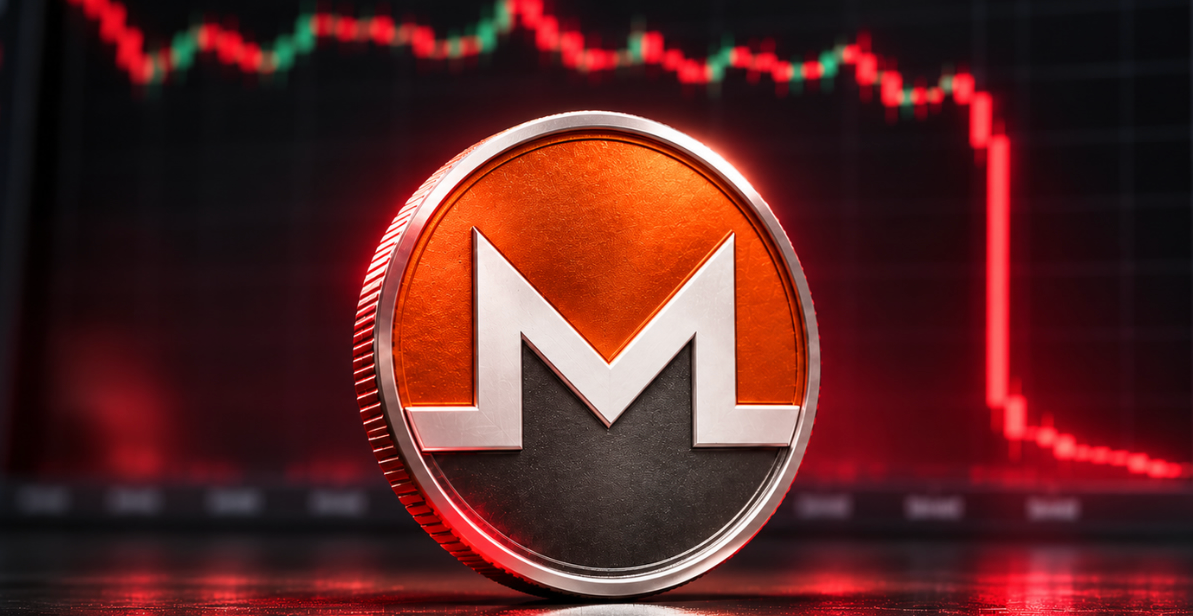
A wrapped version of Monero traded on Hyperliquid has collapsed by more than 99% after an exploit.
XMR1 fell from about $500 to about $1 in roughly half an hour early on Friday, 20 November. The token is issued by Wagyu, a cross-chain swap service that lets users deposit Monero and receive XMR1, which they can later redeem for real Monero.
Monero itself was not affected.
What happened
According to blockchain data firm Bitquery, the token’s deployer account sent 5.2 million XMR1 to a newly created account early on Friday. That account then sold about 364,000 tokens to 388 buyers for about $13.5 million, and converted the money into ETH.
At Bitquery’s last check, about 7,350 ETH was sitting in three wallets. The attacker’s account received its first funds from Tornado Cash, a crypto mixing service, minutes before it was set up.
A web host blamed
Wagyu’s pseudonymous founder, known as PerpetualCow, blamed 1984.hosting, an Icelandic web hosting company. He said the key that controlled the XMR1 deployer account had been stored on an old server there that he had deleted.
“Lesson to learn here is that these hosting providers keep your data/logs even after you delete your server with them,” he wrote.
The hosting company, 1984 ehf., confirmed an “extensive and serious cyberattack” on its IT systems and temporarily shut down all its services. Its statement, made with Iceland’s national cybersecurity team CERT-IS, did not mention Wagyu or say whether customer data had been taken. The link between the two incidents had not been confirmed at the time of writing.
Refunds promised
PerpetualCow said he would personally refund everyone who lost money and that Wagyu would relaunch. “Give me some time please,” he wrote, without giving a timeline.
Bitquery said onchain data alone cannot show whether the deployer key was stolen. It also cannot confirm how much Monero backs the remaining XMR1, because the Monero side of the bridge is not visible.
Wider questions
The same deployer account still controls almost all of ZEC1, a wrapped Zcash token. Wagyu disclosed a separate data leak in October, saying at the time that funds were not affected.
What happens next
XMR1 holders will be watching for details of the promised refunds and the relaunch. Whether the 1984 cyberattack is confirmed as the way the deployer key was exposed will decide how much of the blame lies with the host.