Texans lost $56.8 million to cryptocurrency kiosks in 2025, more than residents of any other state, according to FBI figures presented to a state legislative committee on Thursday. Texas accounted for 1,179 of the 13,460 complaints the bureau recorded nationally that year, a period in which reported losses to the machines rose 58% to $389 million.
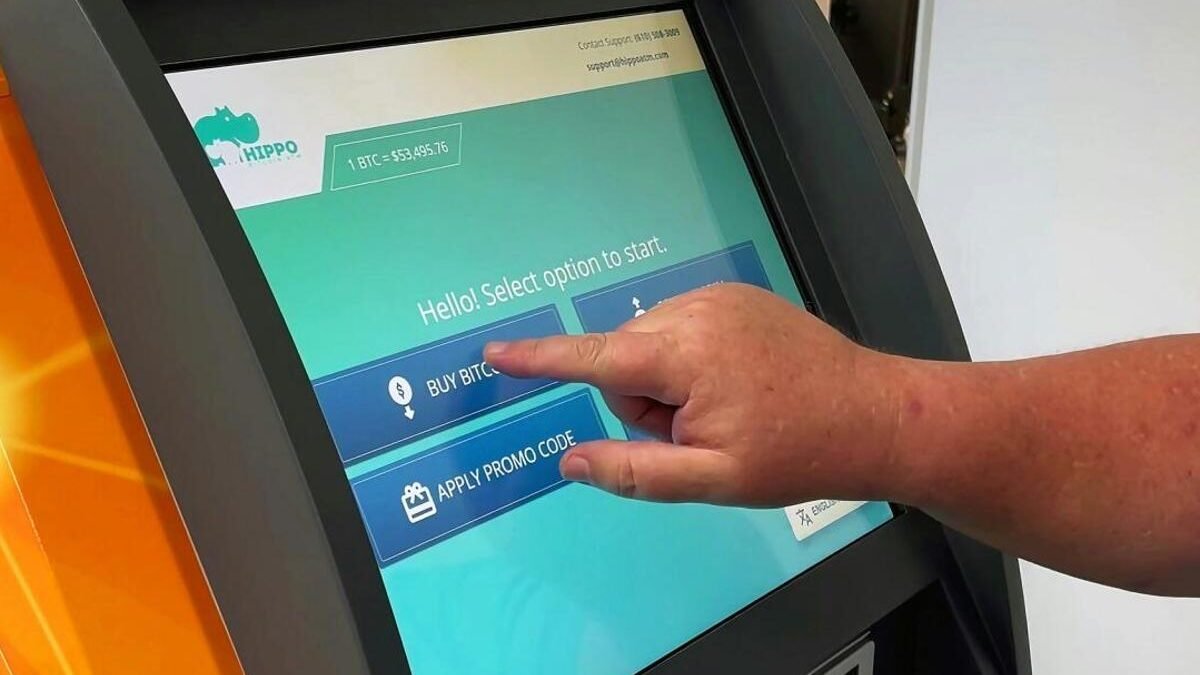
The kiosks accept cash and convert it to cryptocurrency, and are typically found in gas stations and convenience stores. The Texas Tribune counts roughly 4,000 across the state. The scam that drives the losses is consistent: a victim is persuaded to withdraw money from a bank account and feed it into a machine.
What Lawmakers Heard
The House Committee on Homeland Security, Public Safety and Veterans’ Affairs took invited testimony on foreign financial influence and turned quickly to crypto. ‘In my career, I’ve never seen a more efficient, cleaner way to steal money,’ Rep. AJ Louderback said.
Kelley Currie, a fellow at the Atlantic Council, told the committee that Interpol now treats scamming as an industry comparable in scale to drug and human trafficking. Currie also claimed that kiosks in gas stations ‘are run by Chinese money launderers.’ The Justice Department has charged Chinese nationals over crypto fraud compounds in Southeast Asia and prosecuted Chinese money laundering networks moving scam proceeds, but has not said those groups generally operate kiosks, and no evidence for the broader claim was presented to the committee.
Jesse Saucillo, deputy commissioner at the Texas Department of Banking, said recovery is close to impossible once the money moves. Funds typically go to an unhosted wallet, he said, which then ‘gets into a mixer’ and beyond, leaving it ‘very hard to get any of that back.’ He added that AI-generated impersonation of police and state agencies is making the approach calls more convincing.
How the Scam Works and How to Stop It
Kiosk fraud is unusual among crypto scams in that the mechanism almost never varies, which makes it one of the few that can be shut down with a single rule.
Someone makes contact by phone, text or email, claiming to be from the police, a court, a bank, a utility, a government agency or a technology company’s support desk. They create urgency, often a warrant, a frozen account or a compromised system. Then they direct the target to withdraw cash and deposit it into a specific machine, sometimes staying on the line throughout.
The rule that defeats all of it is simple. No police force, court, bank, tax authority or government agency anywhere will ever ask anyone to put cash into a cryptocurrency machine. There is no situation in which that instruction is legitimate. Anyone who receives it is being defrauded, regardless of how convincing the caller sounds or what number appears on the screen.
Saucillo’s point about AI impersonation is what makes this worth repeating now. The calls are getting harder to identify by ear, which means the defence has to rest on the instruction rather than on the caller’s credibility.
Crypto Kiosks Across the U.S.
Some 30 states have enacted legislation relating to crypto kiosks since 2023, according to AARP. The measures in force take two broad approaches.
The first is to restrict rather than remove. South Dakota caps transactions at $1,000 a day and $10,000 a month and requires full refunds for fraud victims, with Wisconsin and Virginia enacting similar caps. Maine’s financial regulator secured a $1.9 million settlement from Bitcoin Depot to reimburse defrauded customers.
The second is prohibition. Indiana banned the machines outright in March, the first state to do so, under a law that allows the attorney general to sue both operators and the shops hosting them. Nearly 900 kiosks were running in the state when the governor signed it. Tennessee and Minnesota have since followed.
The Case for and Against a Ban
Texas committee chair Rep. Cole Hefner signalled the state will look at ‘doing more than regulating them,’ and hinted at legislation. ‘I got a pretty good idea coming down,’ he told colleagues. ‘And it’s kind of simple, but kind of abrupt.’
The argument for prohibition is straightforward. The machines convert cash to crypto irreversibly within minutes, with no meaningful recovery once the transaction clears, and Texas leads the country in reported losses.
Against that, the machines are a genuine on-ramp for people without bank accounts or the documentation to open one, and the ban is geographic while the scam is not. Prohibition in Texas leaves the same machines running across state lines, and the phone call that starts the fraud can just as easily direct a victim to a wire transfer, a gift card or a payment app. A state that bans kiosks removes one channel from a scam that has several.
The alternative on the table is the South Dakota model, which keeps the machines but caps daily transactions and forces operators to refund fraud victims. That places the cost of the fraud on the businesses profiting from the transactions rather than removing the service, and the refund requirement in particular gives operators a direct financial reason to screen suspicious transactions rather than process them.
Some proportion is also worth keeping in view. The $389 million lost nationally to kiosks is around 3% of the $11.37 billion in total crypto fraud reported to the FBI in 2025. Kiosk fraud is growing fast and is unusually preventable, which makes it a reasonable legislative target. It is not where most of the money is being lost.