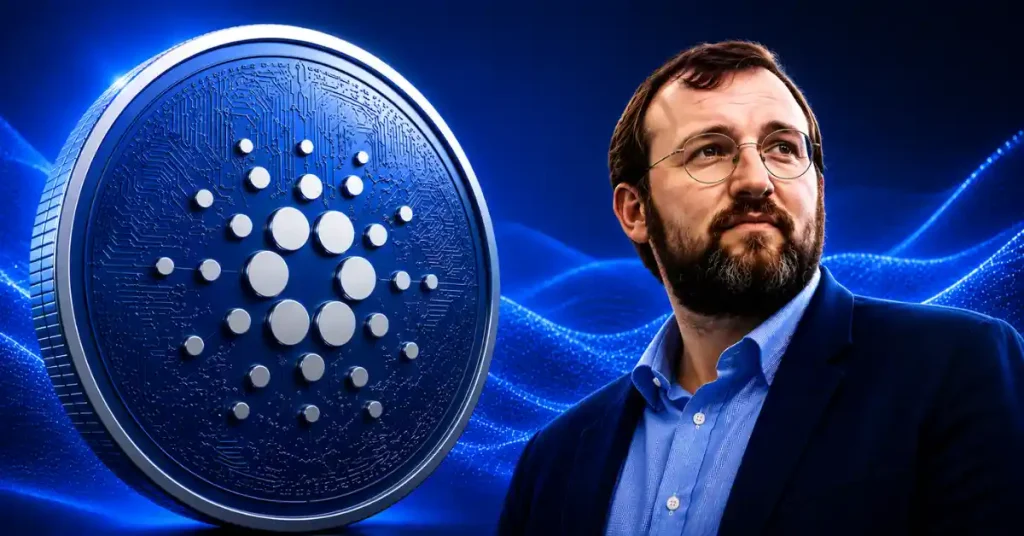
Cardano founder Charles Hoskinson says the network’s long-running roadmap is finished.
“The roadmap is complete. Everything I said is going to be built has been built,” Hoskinson said during a recent ask-me-anything livestream on YouTube, as he argued with investors unhappy about ADA’s price.
He also said he no longer controls the network. “I have no power over this ecosystem,” he said.
A clash with investors
During the stream, a viewer accused Hoskinson of promising that Cardano would overtake Bitcoin. Hoskinson denied it. “I never promised that. I said I’d love for it to happen,” he said.
The viewer later pointed to an earlier comment in which Hoskinson said Cardano would “probably” become the biggest cryptocurrency. Hoskinson replied that he had said “think,” and that he has taken the project as far as he can.
The viewer called it “insane” that a founder would no longer feel responsible to investors. Hoskinson argued that investors mainly want him to push up the price, and that stepping back at any price would disappoint someone.
He said Cardano is now decentralised and self-governing, and can choose its own leaders without his approval.
The five eras
Cardano’s roadmap was split into five eras. Byron launched the network in September 2017, Shelley added staking in July 2020, and Goguen brought smart contracts through the Alonzo upgrade in September 2021.
Basho focused on scaling, with the Vasil upgrade in September 2022. Voltaire, the governance era, arrived with the Chang upgrade in September 2024. The Plomin upgrade in January 2025 then gave ADA holders voting power over the network, completing the move to community governance.
ADA’s long slide
ADA hit an all-time high of $3.09 in 2021. It fell to a low of $0.25 in 2023, then rallied to $1.21 by the end of 2024.
The token now trades around $0.17, about 86% below that 2024 high and more than 94% below its 2021 peak.
What happens next
With the roadmap finished and the founder stepping back, Cardano’s future direction now rests with its holders and their on-chain votes. How they use that power will decide what the network builds next.