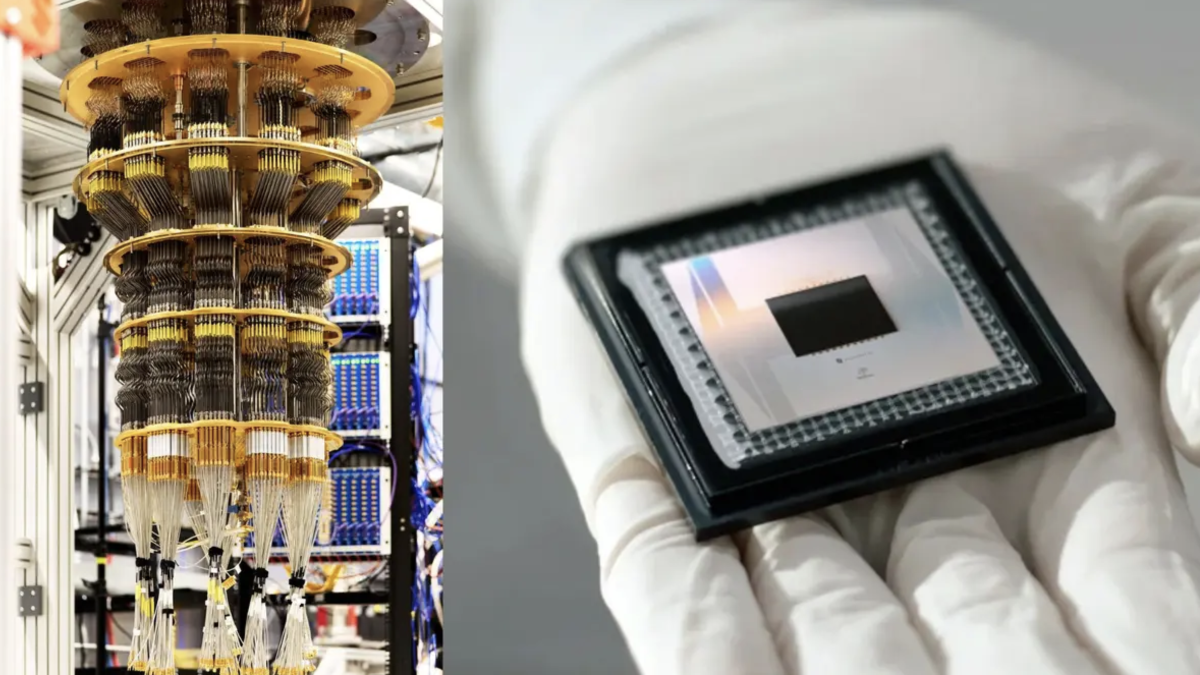
Google has reported a new error-correction result from its Willow quantum chip, cutting errors about 40-fold in one of the steps a future machine would need to attack Bitcoin’s cryptography.
The result, published in the journal Science this week, tackles one bottleneck. It does not make breaking Bitcoin 40 times easier.
What Google did
Large quantum calculations consume special inputs called magic states. Producing them reliably is one of the costly bottlenecks in building a useful quantum computer.
Google says a method called cultivation, run on Willow, cut errors in preparing magic states by about 40 times. Among the states that passed inspection, fidelity was about 99.99%.
Only about 8% of preparation attempts succeeded.
Why it matters for Bitcoin
Bitcoin and Ethereum wallets rely on cryptography that a large enough quantum computer running Shor’s algorithm could, in theory, break.
In March, Google estimated that a future superconducting machine with fewer than 500,000 physical qubits could do that, under specific hardware assumptions. In one modelled attack lasting about nine minutes, the machine would need roughly 500,000 reliable magic states every second.
The new result makes one part of that supply cheaper. It does not combine with earlier savings to shrink the whole task by 40 times.
What is still unsolved
Several major steps remain. Researchers still need to scale magic state production, run it in real time, and move those states into stronger error-correcting systems.
Shor’s algorithm, first published in 1994, has never been demonstrated on a machine capable of attacking real wallets.
Why older coins are most exposed
Some of Bitcoin’s oldest holdings, including coins mined in its first years, have had their public keys visible on the blockchain since they were created. That makes them the likeliest early targets if a capable machine is ever built.
Moving those coins to safer address types requires the original keys, which many owners may have lost.
What happens next
The result narrows one gap between today’s quantum chips and a machine that could threaten Bitcoin, but several larger gaps remain. The practical test for Bitcoin is whether its developers agree a migration plan before that machine exists.