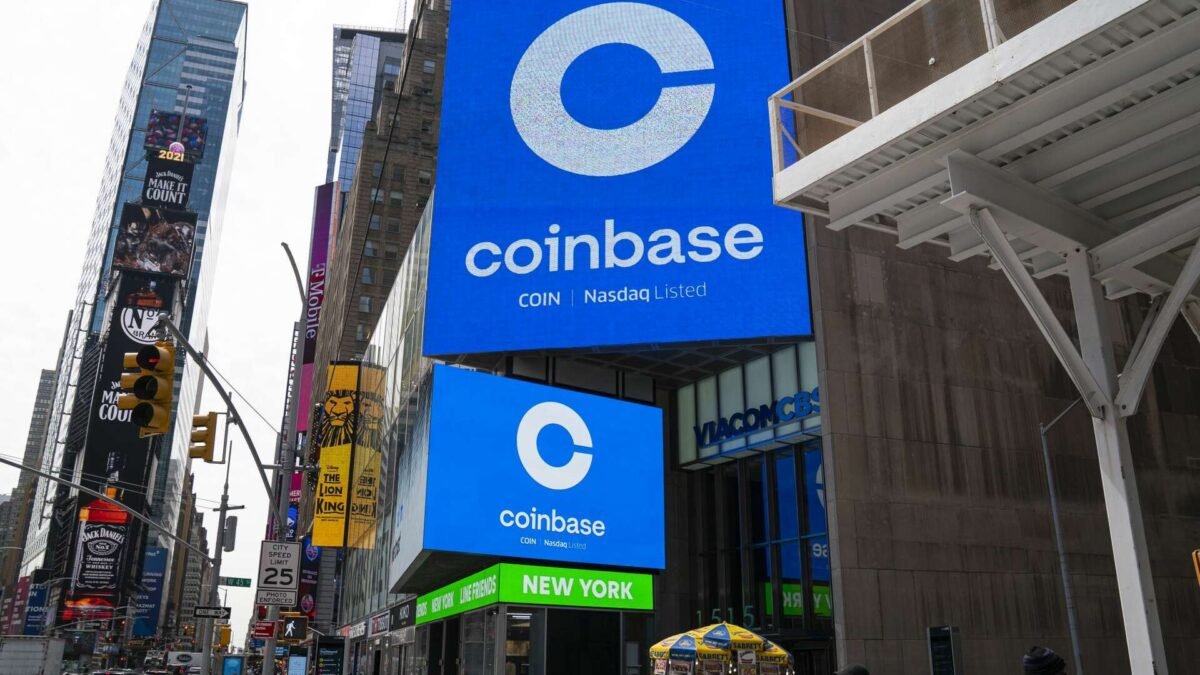
Coinbase began offering US customers the chance to buy shares in initial public offerings at the offer price this week, before the stock reaches public exchanges. The first is Oura, the smart-ring maker, which is selling 50 million shares at $40 to $44 under the ticker OURA on Nasdaq.
These are real equity shares rather than tokenised versions, bought through the Coinbase app and handled by Coinbase Capital Markets, a securities business that sits apart from the firm’s digital-asset operations and which recently received regulatory approval to take part in offerings. Customers fund an account, complete a FINRA questionnaire screening for restricted status, and submit what Coinbase calls a Conditional Offer to Buy.
“A natural step in that direction is to give our customers in the US early exposure to high-interest companies before they hit public exchanges,” a Coinbase spokesperson said, describing the move as part of building an “Everything Exchange.”
Sell Inside 30 Days and You Lose Your Place
The part that will matter most to anyone using this is in the allocation terms.
“Our allocation algorithm prioritizes investors who believe in what they’re purchasing for the long haul,” Coinbase said. “Selling IPO shares within the first 30 days may result in being barred from IPO participation for the following 60 days, with smaller and less frequent allocations given to those who repeat this behavior compared to investors who hold their IPO shares for longer durations.”
There is no lock-up here in the contractual sense. Nothing stops a customer selling on day one. What happens instead is that selling early costs them access to the next offerings, and keeps costing them if they do it again.
Who the Rule Actually Serves
Selling an allocation into an opening pop is not bad behaviour. For a small investor it is often the entire point, and it is how retail captures the one advantage an allocation confers.
Discouraging it has a respectable justification. Flipping can leave an aftermarket unstable in the first days of trading, and an allocation process that rewards holders is arguably fairer to people who want the stock rather than the pop.
It also happens to align Coinbase with the issuers and underwriters it needs to keep supplying allocations, rather than with the customer doing the buying. A stable aftermarket is what an issuer wants. Whether it is what the person holding 20 shares wants depends entirely on what the stock does in week one, and they are the party being asked to wait.
You Might Not Get Any
The last thing worth being clear about is that none of it is a promise.
Coinbase says requests may be filled in full, filled in part, or rejected outright, depending on demand and what underwriters make available. Retail sits at the back of an allocation queue that institutions reach first, and a Conditional Offer to Buy is exactly what its name says.
So the sequence a customer signs up for is this. Fund the account, pass the questionnaire, place an order that may return nothing, and if it does return something, hold it for a month or accept a worse position next time.