BlackRock wants to offer Bitcoin exposure with a safety net.
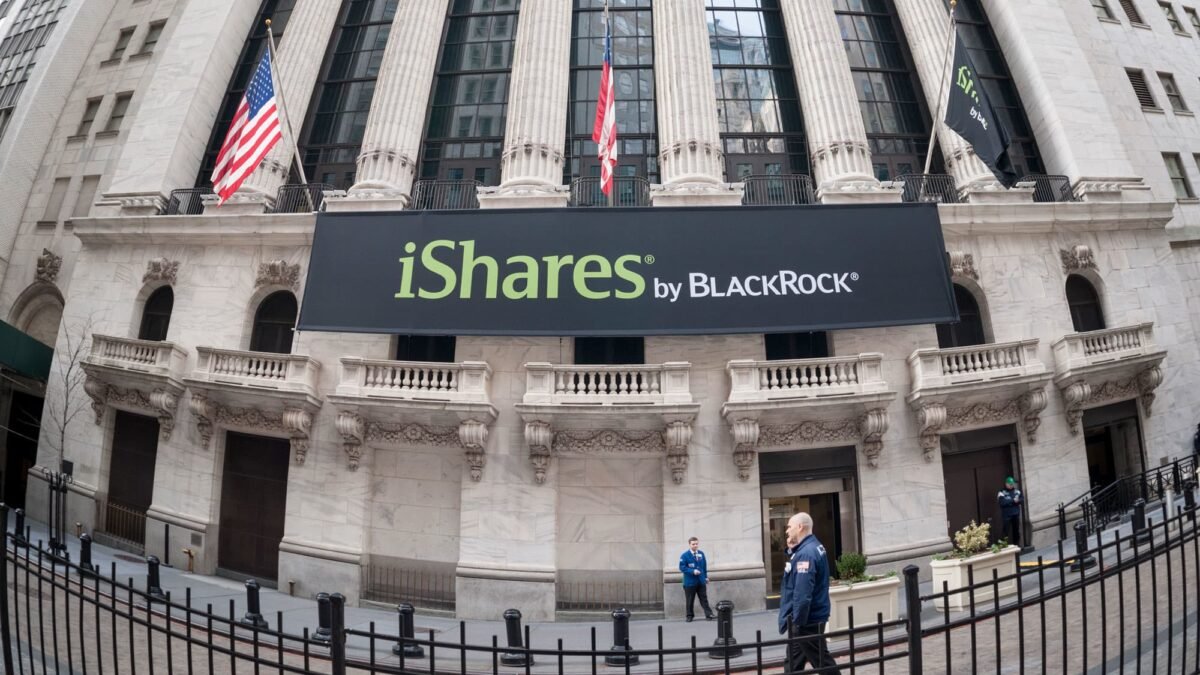
The world’s largest asset manager filed with the US Securities and Exchange Commission on Monday for the iShares Bitcoin Managed Protection ETF, which would trade under the ticker PBIT.
The fund “seeks to provide upside exposure to the iShares Bitcoin Trust ETF (IBIT),” according to the filing, while limiting how much investors can lose.
How the protection works
PBIT would not hold Bitcoin or Bitcoin ETFs directly. Instead, it would buy call options on IBIT or similar exposure, and sell higher-priced call options to help cover the cost. It would also hold fixed-income investments.
The fund would run three overlapping tranches that start on staggered monthly dates. For each tranche, protection typically starts at about 90% of the reference value. That limits initial losses to roughly 10% before fees.
The trade-off is a cap on gains. The cap for each tranche is set by market conditions when that tranche starts, and the fund has broad discretion to change both the cap and the level of protection. Investors should not expect a fixed outcome.
The management fee had not been filled in at the time of writing.
A crowded corner of the market
BlackRock is not first. Calamos, First Trust and Innovator already offer defined-outcome funds tied to Bitcoin.
Bloomberg Intelligence analyst James Seyffart said BlackRock “tends to make a big splash” when it moves into a space like this.
IBIT pulls in $665 million
The filing came on the same day IBIT took in $665.2 million, according to SoSoValue data. It was the only one of the 12 US spot Bitcoin ETFs to record net inflows.
Fidelity’s FBTC saw outflows of $83.6 million and Grayscale’s GBTC lost $54.9 million. Across all the funds, net inflows totalled $526.6 million.
IBIT now holds $66.37 billion in net assets.
What happens next
PBIT still needs to go through the SEC’s review process before it can launch, and BlackRock had not given a launch date at the time of writing. The final fee and the first tranche’s upside cap will show how much growth investors give up in exchange for the protection.