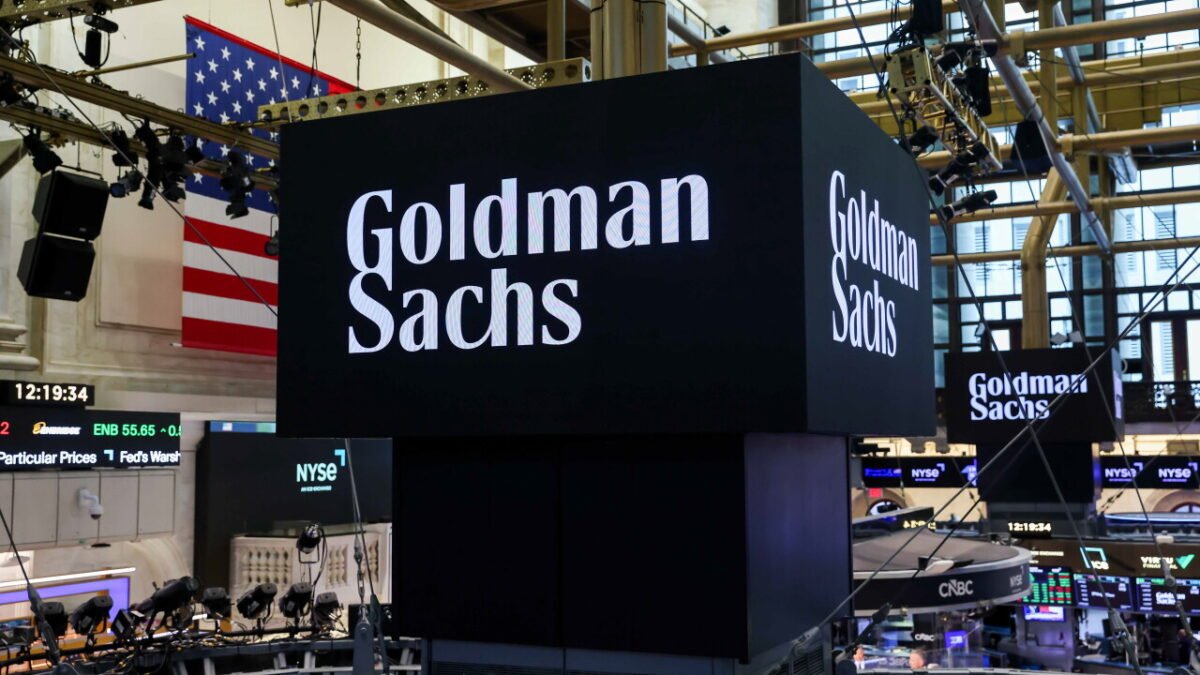
Goldman Sachs runs a $105 billion Treasury fund. It can now be bought through Lynq, a settlement network for digital-asset firms.
Lynq holds a little over $89 million in total assets.
Nothing about the fund has changed to get there.
What Actually Happened
The fund is the Goldman Sachs Financial Square Treasury Instruments Fund, which held $105 billion in net assets at the end of August. tZERO announced that its broker-dealer arm will handle trades in it across Lynq, whose 30-plus institutional members can now hold it alongside the network’s other instruments.
Lynq’s chief executive Jerald David framed it as demand-led. “We needed to demonstrate that there was client demand,” he said, adding that members had asked for “a treasury asset on the platform that may have had a different yield profile than the other instrument that’s on there right now.”
Goldman Sachs is not quoted anywhere in the announcement, which came from tZERO rather than the bank.
The Tokenised Version Was Not the One Used
This is the part worth pausing on. The shares being distributed are the fund’s ordinary Institutional class, which accounts for $97.3 billion of the total.
The fund also has a separate Token Shares class. Those are not being offered through Lynq.
So a large money market fund has been connected to crypto settlement rails using its conventional share class, while the tokenised version of the same fund sat available and unused. Whatever this is, it is not a tokenisation story, and it is not comparable to BlackRock’s BUIDL or Franklin Templeton’s BENJI, where the fund itself lives on a blockchain.
The Scale Gap
A $105 billion fund becoming available to a network holding $89 million is a ratio of roughly 1,180 to one.
That figure is not a criticism of Lynq, which is young. It is a correction to the framing. Nothing has moved. An instrument has been added to a menu, and how much of it members actually buy is the thing that would make this significant.
Why It Is Still Worth Noting
Lynq’s membership is not speculative. B2C2, Wintermute, Galaxy, FalconX, Crypto.com and Fireblocks are among the firms on it, which is close to a roll call of institutional crypto trading.
Giving that group access to a Goldman Treasury fund as a settlement asset is genuinely useful, because idle balances at a trading desk earn nothing and a Treasury fund yields. David also says the platform is now multi-asset capable, which is a real change in what it can hold rather than a marketing line.
The network runs on a private, permissioned Avalanche chain. Access requires a relationship with tZERO Securities, onboarding and eligibility checks, and is limited to US-based customers.