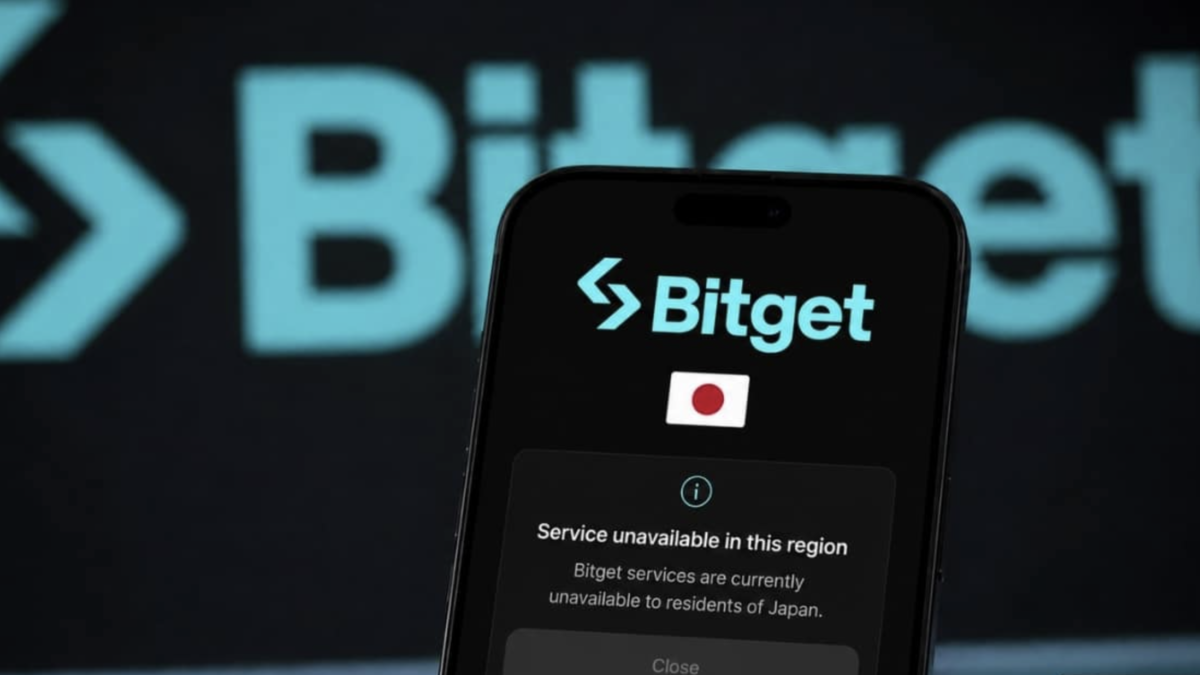
Bitget will stop providing crypto trading services to residents of Japan, citing compliance with local regulation, and will forcibly close every remaining position by 31 December.
The exchange, registered in the Seychelles and ranked fifth by CoinGecko with roughly $714.7 million in 24-hour trading volume, stopped accepting new registrations from Japanese users on Sunday, according to a Monday announcement.
The two dates that matter
From 1 November, affected accounts move into close-only mode. Users will be unable to open new positions or add to existing ones, and will lose access to spot trading, futures trading, copy trading, trading bots and earn products. Deposits, subject to limits, and withdrawals remain available.
On 31 December, Bitget will forcibly close all remaining open positions and suspend card services. Withdrawals will still work after that date.
The forced closure is the part worth planning around. Anyone holding a leveraged position on 31 December does not choose their exit price. The position is closed at whatever the market is doing that day, which makes the sensible course closing out on your own terms well before the deadline rather than letting the exchange do it.
If you have been flagged in error
Existing users who believe Bitget has incorrectly identified them as Japanese residents have until 1 November to complete Level-2 identity verification, including proof of address. Accounts that do not complete the process by then will be treated as Japanese and moved into close-only mode.
That is the detail most likely to catch people out. Residency flags on exchanges are often set from IP address, phone number or the documents originally used at signup, so a non-resident who travelled through Japan, holds a Japanese phone number, or registered while living there can be swept in. The burden sits with the user, the deadline is firm, and doing nothing counts as accepting the classification.
What Japan actually changed
The withdrawal follows a significant shift in Japanese policy. Legislation approved by parliament in mid-July reclassified cryptocurrencies as financial instruments, with the rules expected to take effect next year. They carry fines of about $62,800 and prison sentences of up to 10 years for operating without registration.
The penalties are only half of it. The same reclassification moves crypto out of Japan’s miscellaneous income category, where gains have been taxed at rates reaching around 55%, and toward treatment closer to that applied to stocks. For Japanese investors that is a substantial improvement, and it is what much of the domestic industry had been asking for.
The trade is straightforward. Japan is offering better tax treatment for holders in exchange for tighter licensing of the platforms serving them. Exchanges that want access to the market must register with the Financial Services Agency, and the country has taken a consistently strict line on foreign platforms operating without doing so.
Bitget was already on the regulator’s radar. In 2023 it received a warning letter, alongside Bybit, BitForex and MEXC, notifying the exchanges that they were operating in Japan without proper registration and in breach of the country’s fund settlement laws.
No specific trigger named
Bitget attributed the decision to compliance with local regulation but did not identify a specific regulatory change or enforcement action behind it, and did not respond to requests for further information from reporters.
The wider context is that exchanges are contracting. BitMEX confirmed last month it will shut down in September after eleven years, and BitMart will end trading on 26 August before closing entirely in January 2027. Bitget is not closing, but withdrawing from a major developed market rather than registering to serve it is the same underlying calculation, which is that the cost of compliance in a given jurisdiction now exceeds what the business there is worth.
For Japanese traders the practical effect is a smaller field of platforms, with the ones that remain being those willing to register domestically. Whether that is a loss depends on how much value there was in access to unregistered offshore venues in the first place.