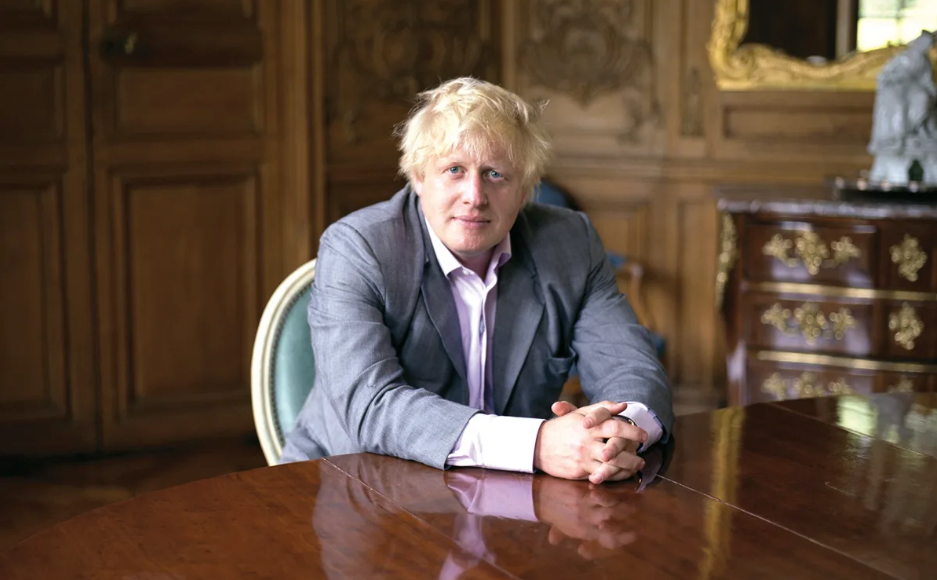
Former UK Prime Minister Boris Johnson has said he is still sceptical of Bitcoin, speaking on stage at Solana’s Breakpoint conference in London.
“As far as I can see, nobody knows who’s in charge, apart from Yakimoto Nakasori, and I don’t know where to find him,” Johnson said, mangling the name of Bitcoin’s anonymous creator, Satoshi Nakamoto.
He also questioned who would help people recover stolen funds, and suggested that the word “crypto” implies something hidden.
No crypto in his own wallet
Johnson said he is not a crypto enthusiast and holds little or no crypto himself. He said his doubts were shaped partly by a man in his Oxfordshire village who lost money on crypto and kept investing in an attempt to win it back.
In a Daily Mail column in March, Johnson called Bitcoin a “giant Ponzi scheme.” Strategy chairman Michael Saylor responded at the time that Bitcoin has no issuer, no promoter and no guaranteed return.
Pushback on stage
The conference moderator challenged Johnson, arguing that blockchains are easier to trace than cash, after Johnson suggested Bitcoin appeals to drug dealers. Asked who guarantees Bitcoin, the moderator said no one needs to, calling that “the beauty of the protocol.”
Support for blockchain
Johnson said his scepticism does not extend to the technology behind crypto. He said the UK has “got to be at the forefront” of blockchain and the tokenisation of assets.
Lord Ross Kempsell, a Conservative peer and Johnson’s former aide, said more than 8% of UK adults hold crypto and that institutional use is growing in the City of London. He said the UK’s coming crypto rules were a chance to build “a high growth industry,” while adding that he shares Johnson’s concerns about the risks.
Where UK rules stand
The Financial Conduct Authority (FCA) finalised its crypto rulebook in June, with a mandatory regime due to start in late 2027. The Bank of England has also eased its stablecoin rules, dropping limits on how much individuals can hold in favour of a £40 billion cap on how much of each stablecoin can be issued.
An FCA study from August and September 2025 found that 8% of UK adults own crypto, down from 12% in 2024 but double the level in 2021.
What happens next
The UK’s crypto regime is set to become mandatory in late 2027. Johnson’s comments show that support for blockchain in British politics does not always extend to Bitcoin itself.