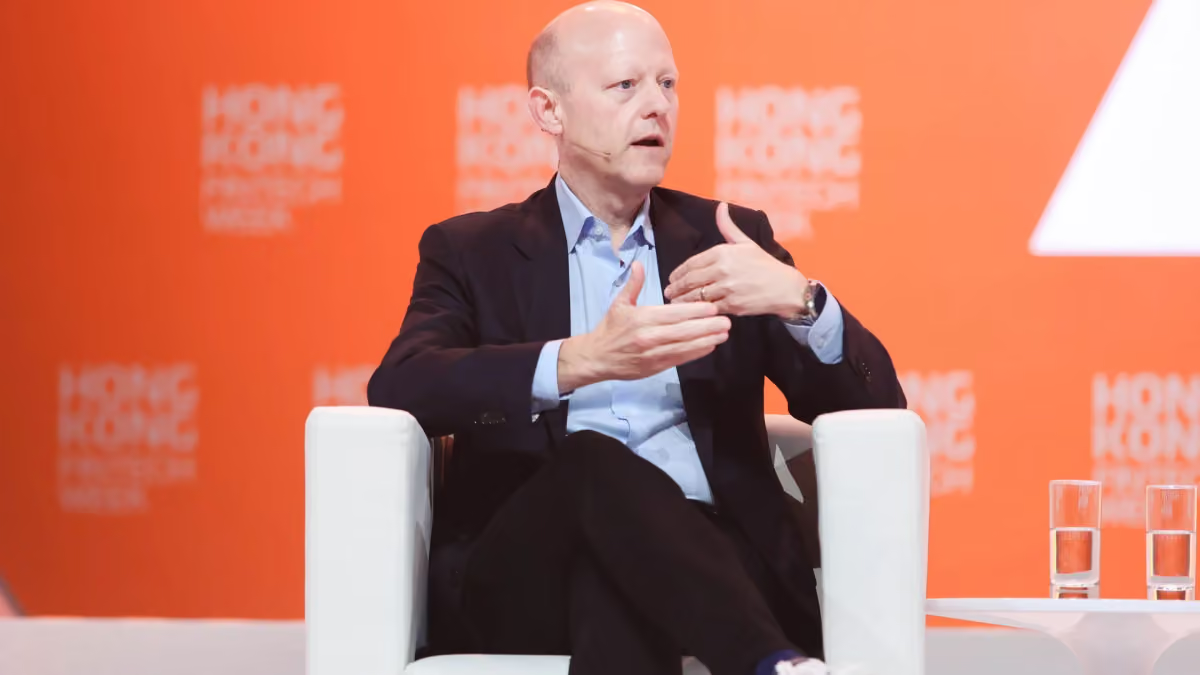
Circle is preparing to expand into around 40 emerging and developing countries, chief executive Jeremy Allaire told Reuters.
Allaire spoke on the sidelines of the IMF and World Bank meetings in Bangkok. He pointed to rising organic demand for stablecoins in Southeast Asia, Latin America, Africa and the Middle East, from people and businesses that increasingly work in an internet-based economy.
No country list or timeline for the expansion was given.
Why Circle says now
Allaire argued that blockchain is moving “from the early adopter phase of blockchain technology into the mainstream scaling phase.”
He also pointed to the GENIUS Act, the US stablecoin law due to take effect in January. He called it “a watershed moment” that would give the world “legal digital dollars.”
What Circle is bringing
USDC circulation rose 19% year on year to $73.3 billion in the second quarter.
Circle secured a federal banking charter in July and has been pursuing a New York trust charter.
According to Reuters, the expansion will draw on Circle’s $400 million acquisition of payments firm Tazapay. Reuters also reported that Circle’s Arc network has been adopted by BlackRock, Visa and Standard Chartered.
Banks are coming too
Banks are building their own stablecoins, which puts them in direct competition with issuers like Circle.
Allaire framed that as healthy competition, saying incumbents “are no longer in charge, and the innovators are having their day.”
He also said small machine-to-machine payments made by AI agents are adding to USDC usage. But he warned that AI raises security risks for financial infrastructure: “If you’re not concerned about it, then your head is in the sand, right?”
What happens next
The demand Circle describes comes from the company itself, and no independent figures had been published at the time of writing. The test will be which countries Circle names first, and whether local regulators in those markets license a dollar stablecoin issuer to operate at scale.