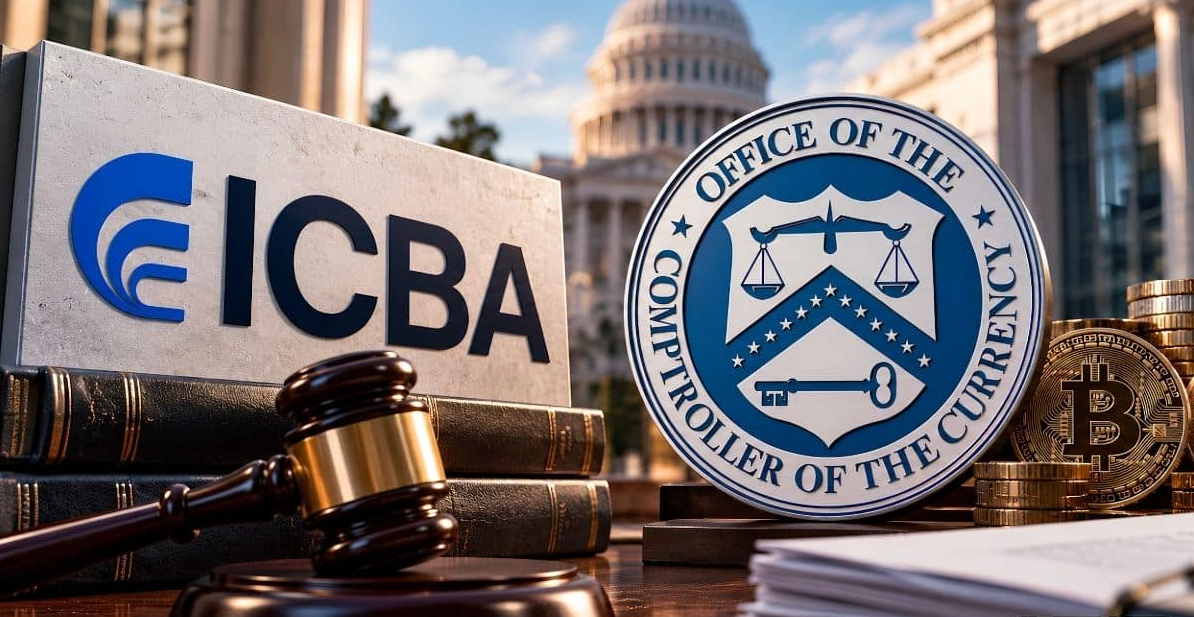
The Independent Community Bankers of America has sued the Office of the Comptroller of the Currency to stop crypto firms obtaining national trust bank charters.
The case, filed on 2 October in the US District Court for the District of Columbia, challenges the OCC’s final rule of 2 March 2026 and Interpretive Letter No. 1176, which together allow national trust banks to carry out substantial crypto activity that is not traditional fiduciary work.
What the banks argue
The ICBA says the OCC has gone beyond what Congress allowed. “The OCC’s decision to allow companies to obtain national trust bank charters to conduct substantial non-fiduciary activities exceeds the authority Congress granted the agency,” said Rebeca Romero Rainey, the group’s president and chief executive.
The complaint argues that crypto firms holding these charters gain the credibility of a federal bank without the obligations that come with one, including FDIC deposit insurance, capital and liquidity standards and the Community Reinvestment Act. “American consumers reasonably expect a federally chartered bank to carry federal protections,” Romero Rainey said.
Why Protego
The suit names one charter directly. Protego Holdings, which offers digital asset custody, trading, lending and issuance, received conditional approval in February 2026.
The ICBA points to Protego’s record. The company laid off most of its workforce in 2023 and has faced vendor lawsuits over unpaid bills that ended in judgments against it. The ICBA describes “severely flawed risk and control functions and governance structures that lack independent oversight.”
The ICBA wants Protego’s conditional charter vacated, and the rule and interpretive letter declared unlawful.
The wider stakes
Protego is the test case, not the whole case. The rule the ICBA wants struck down is the same framework under which the OCC has granted conditional trust charters to firms including Circle, Ripple and Paxos.
If the court sides with the bankers, those approvals lose the legal footing they were built on. If it sides with the OCC, the route into federal banking for crypto firms becomes far harder to challenge.